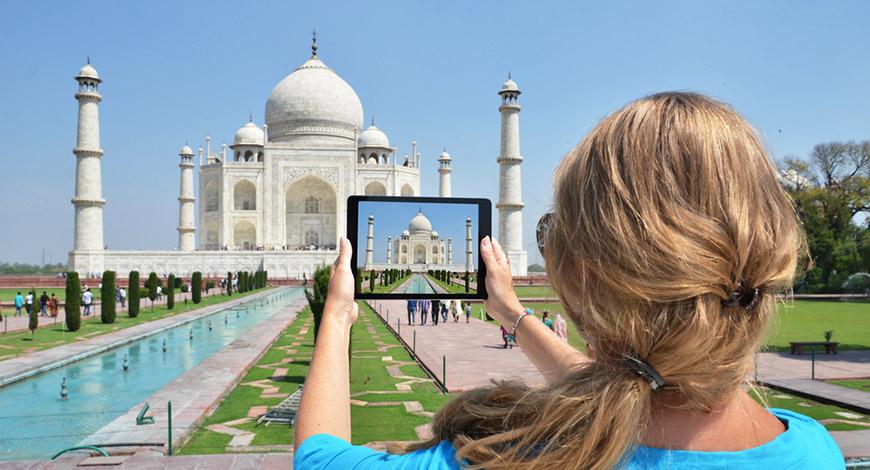
If you’re a first-time traveler to India, here are a few important tips to keep in mind.
1. Stay Connected From the Moment You Land
Since you’ll be arriving in India by air, the first thing to sort out is staying connected — with your hotel, your driver or tour operator, and even your family back home. For this, you’ll need an internet connection.
The easiest way is to keep international roaming active on your own SIM card. If you don’t have that, you can simply buy a local SIM card at the airport itself — you’ll just need your passport and a couple of other basic documents. This is a must-do, because as you travel across different parts of India, staying connected will make it much easier to coordinate with people and stay in touch if your plans change.
2. Exchange Currency Early — It’s Not Easy Everywhere
Another important thing: it’s not easy to exchange US dollars (or other foreign currency) in every Indian city. So, right after landing, it’s best to exchange some currency into Indian Rupees (INR) at the airport.
Almost everything you pay for in cash — tips, meals, entry tickets to monuments, and so on — will need to be INR, since very few hotels or shops accept foreign currency directly.
If you have a trustworthy tour operator or travel guide, they can also point you to good currency exchange counters within the city — many travelers prefer this, since city exchange rates are usually better than airport rates. Airport counters are reliable and convenient, but they tend to charge higher exchange rates in comparison.
3. Choose the Right Transportation
Transportation is one of the most important things to plan carefully before your India trip, and you generally have a few options to choose from.
Option 1: Booking Transfers Through Online Ride-Hailing Apps
Using apps to book airport transfers or local rides is a convenient option, but it comes with a few limitations. These apps run on a demand-and-supply model, which means prices can spike significantly during high-demand periods, especially at airports.
Another thing to watch out for: if you’re traveling between cities, or your arrival airport is in a different city from your final destination, there are sometimes additional charges that aren’t shown upfront in the app price — and your driver may ask for these separately once the trip is underway. It’s always a good idea to double-check what’s included in the fare before you book, so there are no surprises later.
Option 2: Booking a Dedicated Car for Your Entire Trip
This is the option we generally recommend to first-time travelers, because it makes the whole trip far more hassle-free. With a dedicated vehicle and driver, you don’t have to worry about availability, pricing fluctuations, or last-minute bookings — your driver is with you throughout your journey.
Most drivers we work with are available from around 9 AM to 7–8 PM each day, and timings can usually be adjusted if you need a little extra time on a particular day. For most first-time travelers, this option offers the smoothest, most predictable experience.
Option 3: City-by-City Bookings via Ride-Hailing Apps
This is also workable, but it comes with the same demand-and-supply pricing challenges mentioned earlier, along with the added task of planning your own routing — deciding what to see first, second, and so on.
This is actually one of the key advantages of booking through a tour operator: along with transportation, you also get a well-planned itinerary and routing, so you always know where you’re headed next without having to figure it out yourself.
Choosing the Right Vehicle for Your Group
Getting your transportation right isn’t just about how you book it — it’s also about choosing the right vehicle size for your group. A solo traveler, a group of four, a group of six, and a group of twelve all need very different vehicles. We offer a range of options — from sedans to SUVs to larger vehicles — so you can choose what fits your group size, comfort preferences, and budget.
Getting this one decision right early on makes a noticeable difference in how smooth and stress-free the rest of your trip feels.
4. Choosing the Right Accommodation
Accommodation is another critical factor to get right, and a few key considerations can make a significant difference to your overall experience.
Location: Prioritize the City Center
Where you stay matters as much as what you stay in. If you’re spending just one or two days in a city, staying in or near the city center is highly recommended — most shopping areas, restaurants, and attractions tend to be concentrated there, meaning many places will be within easy walking distance of your hotel.
That said, city-center accommodations are often priced higher, so this ultimately depends on your budget. As a general recommendation, however, we suggest prioritizing city-center stays wherever possible for the convenience it offers.
Reliability: Be Careful With Room Categories When Booking Online
When booking accommodations through online travel platforms, it’s important to understand how hotel inventory typically works. Hotels often allocate a separate quota of rooms specifically for online bookings — and these are usually their most basic room categories.
This happens because walk-in guests get to see the property in person before deciding, so hotels naturally offer them better rooms to close the sale. Online bookers, without that in-person interaction, are more likely to be allocated standard or lower-tier rooms.
To avoid this, we recommend checking the hotel’s own website to understand their room categories, and booking a step above the most basic option — ideally the second or third tier up. This small step significantly reduces the chance of unpleasant surprises on arrival, and combined with a good location, makes for a much smoother stay.
Meal Inclusions: What to Include in Your Plan
Before booking, check whether breakfast and dinner are included in your room rate.
-
- Breakfast: We generally recommend including breakfast in most cities — it’s convenient and saves time before a full day of sightseeing.
-
- Lunch: Since you’ll typically be out exploring during midday, plan to eat lunch at local restaurants rather than returning to the hotel. This is usually a natural, enjoyable part of experiencing local food.
-
- Dinner: This is entirely a matter of preference. You can choose to dine at the hotel for convenience, or head out to explore local restaurants and cuisine — both are perfectly reasonable options depending on how adventurous you’d like to be.
Hotel Category: Choose Reviews Over Photos
Hotel photos can be deceiving — a property that looks excellent in pictures doesn’t always match expectations in person. This is especially true in the budget category, where quality can vary significantly between properties.
For a more consistent and comfortable experience, we recommend choosing 3-star premium, 4-star, or 5-star properties. Four- and five-star hotels tend to offer the most predictable quality, while 3-star properties can also work well — but require a bit more diligence.
Before booking, always check recent guest reviews, and if possible, consult a trusted tour operator who can confirm whether a property has a strong track record and which room categories are genuinely worth booking. This extra step goes a long way in avoiding disappointment and ensuring a comfortable stay throughout your trip.
5. Hire a Licensed, Knowledgeable Guide
A good guide can make or break your experience in India. This is the person who represents each city to you — providing insights into local monuments, history, culture, and cuisine that you simply won’t get on your own. Choosing the right guide is one of the most important decisions you’ll make for a smooth, enriching trip.
Always Verify the License
It’s strongly recommended to hire only licensed guides, rather than relying on individuals who casually offer their services outside monuments and tourist sites. India does have a number of unlicensed individuals operating as guides, and while some may seem knowledgeable, working with an unlicensed guide increases the risk of misinformation or, in some cases, being misled entirely.
For major monuments and metropolitan cities in particular, always ask to see your guide’s official license before starting your tour. Licensed guides are trained and registered, which means they’re genuinely equipped to provide accurate, in-depth knowledge about the sites you’re visiting — not just a rehearsed, generic script.
Engage With Your Guide — Ask Questions
A good guide should welcome curiosity. Don’t hesitate to ask detailed questions about the history, culture, and context of what you’re seeing — this is exactly where a licensed, experienced guide adds real value to your trip.
Be Cautious With Shopping Recommendations
One area to stay alert to: if your guide recommends specific shops or stores, particularly for souvenirs or local products, approach it with a degree of healthy skepticism. Some guides do receive commissions for directing tourists to certain shops, which isn’t necessarily dishonest, but it does mean the recommendation may not always reflect the best price or quality available.
If you’re interested in shopping, it’s worth asking questions, comparing prices, and not accepting the first option presented without a second thought. A trustworthy guide will be transparent and comfortable with this — and it ensures you get genuine value for your purchases.
6. Choosing the Right Restaurants and Managing Food Intake
Food is one of the true highlights of traveling in India — the country offers an incredible diversity of cuisine, with nearly every city known for its own signature dishes worth trying. That said, enjoying India’s culinary scene safely requires a bit of strategy, especially for first-time visitors.
Street Food: Enjoy It, But Choose Hygienic Sources
Street food is often considered one of the best ways to experience authentic Indian flavors, and it’s absolutely worth trying. However, it’s important to be selective about where you eat. Indian cuisine also tends to be quite spice-heavy, which can be a significant adjustment for travelers unaccustomed to it.
Look for well-reviewed, hygienic street food vendors or established food chains that serve street-style food with proper hygiene standards — these are increasingly common in most major cities and offer a good balance of authenticity and safety.
Fine Dining: A More Controlled Alternative
Alongside street food, most cities also offer excellent fine-dining restaurants serving a wide variety of cuisines. These tend to be pricier, but offer a more controlled, consistent experience — a good option to balance out your street food adventures, especially earlier in your trip.
Pace Yourself: Moderation Is Key
Here’s a pattern we’ve observed often: travelers who dive enthusiastically into street food on their very first or second day in India — say, right after arriving in Delhi — sometimes find their stomachs struggling to adjust. For a short trip, this is a minor inconvenience. But for a longer, ten-day-plus itinerary, it can significantly disrupt the rest of the trip, making it difficult to fully enjoy the sightseeing and experiences ahead.
Our recommendation: enjoy street food, but do so in moderation, especially in the early days of your trip. Give your system time to adjust before indulging heavily, and pace your spice intake gradually rather than diving in all at once. This one simple habit can make the difference between a smooth, enjoyable trip and a rough one.
7. Be Smart About Shopping and Bargaining
It’s fairly common for tourists visiting India to be steered heavily toward shopping — often by tour guides or operators who recommend specific stores primarily to earn a commission. These recommended shops also tend to be significantly overpriced, with a hidden margin built into the price to cover that commission.
Our advice: do a little research on your own before shopping, and prefer places you’re already familiar with or have specifically researched in advance. When a guide or shop steers you toward a particular store, understand that a commission is often involved — and while the product itself may be genuine, you could easily end up paying several times its actual value.
It’s also worth keeping in mind that, apart from a few fixed-price outlets, bargaining is a normal and expected part of shopping almost everywhere in India. Don’t hesitate to negotiate confidently — it’s a completely legitimate part of the shopping culture here, not something to feel awkward about. Many items, especially in more informal or market-style settings, are initially quoted at prices far above their actual worth, and with a bit of firm, well-informed bargaining, you can often get the same product for a fraction of the first price offered.
That covers our key recommendations for a smooth, well-informed trip. Take care of yourself — and we look forward to welcoming you to India.